A good article to view on:

Showing posts with label Plastics Safety. Show all posts
Showing posts with label Plastics Safety. Show all posts
Wednesday, April 4, 2012

Monday, April 2, 2012
Plastic Containers

Well, today, let us
talk about plastic safety again. Since we know that polystyrene is not suitable
for packed food, then what should we use for our packed food? Most of us will
opt from plastic container such as Tupperware, Cosway, Apple Lady and so on. Those
plastic containers cost more, but we cannot doubt the benefits that they have
brought.
Here are several benefits of using plastic
container instead of polystyrene container.
1. Plastic containers
are safer than polystyrene containers.
As what we have discussed in another post, polystyrene container disposes poisonous
elements when it is heated. Polystyrene contains the toxic substances Styrene and
Benzene, suspected carcinogens and neurotoxins. On the other hand, plastic containers are safer when
they are exposed to heat. The chances for the plastic containers to eliminate
poisonous gases are lower if compare to polystyrene containers.
2. Plastic containers are reusable.
Unlike polystyrene containers, we can always
reuse plastics containers for different purposes. By doing this, we are giving
out forces to help to save our environment from plastics pollution.
3. Plastic containers can help to keep the food
fresh.
Compare to polystyrene containers, plastics
containers are more suitable for keeping fresh food. Foods that are kept in
polystyrene containers are more likely exposed to the bacteria in the air. On
the other hand, plastics containers help to keep the food fresh.
Conclusion:
However, not all plastics containers have the
benefits stated above. So, do choose reliable brands for your plastics containers.
Some low quality plastic containers might even as danger as polystyrene containers.
As a conclusion, spend some time and spend more money and buy a good quality
plastic container, it save your life and good for your health.
Friday, March 30, 2012
Polystyrene Container
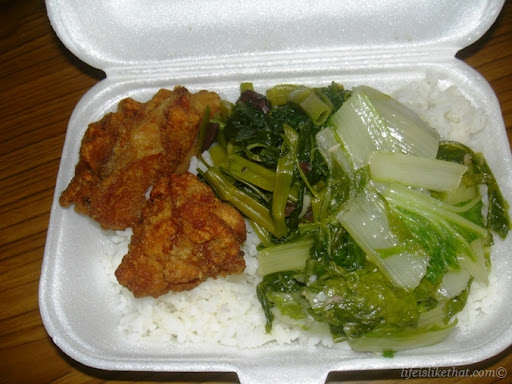
Every
time when you are having your packed meal, do you concern about the container
used for your packed meals? What containers do you usually use for your packed
meals?
Nowadays,
polystyrene containers are the most popular container used for packed lunch.
Due to its lower cost and convenience, most people choose it as the container
for packed meals. Besides that, polystyrene containers are easily available on
the market. However, many consumers do not aware of the negative impacts
brought by polystyrene containers.
First
of all, polystyrene container disposes poisonous elements when it is heated. Polystyrene contains
the toxic substances Styrene and Benzene, suspected carcinogens and neurotoxins. So,
when we pack our fresh warm food by using polystyrene container, the heat of
food will cause the container itself to eliminate poisonous gases. Those gases
might bring harmfulness to our human body such as causing cancer and food poisoning.
Research found that in packaged foods with the addition of heat
(such as microwave temperatures), vitamin A will decompose and produce
m-xylene, toluene, and 2,6-dimethylnaphthalene. Toluene will aggressively
dissolve polystyrene. All those gases will be absorbed into our body tissue and
bring harmfulness.
Lastly, as a reminder, please reduce the use of polystyrene to
pack you food. Do take care of your life and stay healthy.
Sunday, March 11, 2012
Plastics Safety
Recent
years, publics have increased their awareness towards plastics. As we all know,
plastics play an extremely important role in our daily lives. Lots of products
are made from plastics.
However,
no all plastic products can be safely used. Some of them might contain
hazardous elements. Also, not all plastic products are reusable. For example,
plastic bottles shouldn’t be reuse as it release poison odour after washed. In
addition, most of the plastics cannot stand heat. Hence, it is not advisable to
pour hot water into plastic bottles. Below, I would like to introduce several
kinds of plastics that we usually use in our daily lives.
1. Polyethylene Terephthalate (PET or PETE)
Usage: Drinking bottles (soft drin, mineral water, etc)
Advantage: Not known to leach any chemicals that are suspected of causing cancer or disrupting hormones.
Usage: Drinking bottles (soft drin, mineral water, etc)
Advantage: Not known to leach any chemicals that are suspected of causing cancer or disrupting hormones.
2. High density polyethylene (HDPE)
Usage: Milk, water, and juice bottles, yogurt and margarine tubs, cereal box liners, and grocery, trash, and retail bags.
Advantage: Not known to leach any chemicals that are suspected of causing cancer or disrupting hormones.
Usage: Milk, water, and juice bottles, yogurt and margarine tubs, cereal box liners, and grocery, trash, and retail bags.
Advantage: Not known to leach any chemicals that are suspected of causing cancer or disrupting hormones.
3. Polyvinyl chloride (V or PVC)
Usage: Most cling-wrapped meats, cheeses, and other foods sold in delicatessens and groceries are wrapped in PVC.
Disadvantages: To soften into its flexible form, manufacturers add “plasticizers” during production. Traces of these chemicals can leach out of PVC when in contact with foods. According to the National Institutes of Health, di-2-ethylhexyl phthalate (DEHP), commonly found in PVC, is a suspected human carcinogen.
Usage: Most cling-wrapped meats, cheeses, and other foods sold in delicatessens and groceries are wrapped in PVC.
Disadvantages: To soften into its flexible form, manufacturers add “plasticizers” during production. Traces of these chemicals can leach out of PVC when in contact with foods. According to the National Institutes of Health, di-2-ethylhexyl phthalate (DEHP), commonly found in PVC, is a suspected human carcinogen.
4. Low-density polyethylene
(LDPE)
Usage: Some bread and frozen food bags and squeezable bottles.
Advantage: Not known to leach any chemicals that are suspected of causing cancer or disrupting hormones, but not as widely recycled as #1 or #2.
Usage: Some bread and frozen food bags and squeezable bottles.
Advantage: Not known to leach any chemicals that are suspected of causing cancer or disrupting hormones, but not as widely recycled as #1 or #2.
5. Polypropylene (PP)
Usage: Some ketchup bottles and yogurt and margarine tubs.
Advantage: Hazardous during production, but not known to leach any chemicals that are suspected of causing cancer or disrupting hormones. Not as widely recycled as #1 and #2.
Usage: Some ketchup bottles and yogurt and margarine tubs.
Advantage: Hazardous during production, but not known to leach any chemicals that are suspected of causing cancer or disrupting hormones. Not as widely recycled as #1 and #2.
6. Polystyrene (PS)
Usage: Foam insulation and also for hard applications (e.g. cups, some toys)
Disadvantage: Benzene (material used in production) is a known human carcinogen. Butadiene and styrene (the basic building block of the plastic) are suspected carcinogens. Energy intensive and poor recycling.
Usage: Foam insulation and also for hard applications (e.g. cups, some toys)
Disadvantage: Benzene (material used in production) is a known human carcinogen. Butadiene and styrene (the basic building block of the plastic) are suspected carcinogens. Energy intensive and poor recycling.
7. Other (usually polycarbonate)
Usage: Baby bottles, microwave ovenware, eating utensils, plastic coating for metal cans
Disadvantage: Made with biphenyl-A, a chemical invented in the 1930s in search for synthetic estrogens. A hormone disruptor. Simulates the action of estrogen when tested in human breast cancer studies. Can leach into food as product ages.
Usage: Baby bottles, microwave ovenware, eating utensils, plastic coating for metal cans
Disadvantage: Made with biphenyl-A, a chemical invented in the 1930s in search for synthetic estrogens. A hormone disruptor. Simulates the action of estrogen when tested in human breast cancer studies. Can leach into food as product ages.
Subscribe to:
Posts (Atom)